
Patient resource – 2026 edition
TMS El Paso Options Guide 2026
Compare TMS clinics, costs, technology and treatment options across El Paso, Las Cruces and Ciudad Juarez.
This practical Borderland – Cd.Juarez, Las Cruces, and El Paso TMS guide helps patients compare location, device type, protocols, evidence, insurance, self-pay pricing, language access and questions to ask before treatment.
Published by NeuroSpa Clinic in Ciudad Juarez. NeuroSpa is included in the directory. This is an informational comparison, not an independent ranking or medical advice.

Two countries – Three cities – One comparison framework
Looking for TMS in El Paso? Start here.
Transcranial magnetic stimulation (TMS) is a noninvasive treatment that uses magnetic pulses to influence targeted brain circuits. In the Borderland, patients can consider providers in El Paso, Texas; Las Cruces, New Mexico; and Ciudad Juarez, Chihuahua. Those options differ in more than price: the machine and coil, stimulation intensity, protocol, conditions advertised, targeting method, clinical oversight, insurance participation, language access, and whether psychotherapy or cognitive rehabilitation is integrated all matter.
The regional situation is unusually complex because patients are comparing care across two countries, three cities, two regulatory systems and two currencies. This page translates the companion 31-page guide into accessible, crawlable web content so you can build a shortlist and ask better questions.
Independent-choice disclosure. This resource was published by NeuroSpa Clinic in Ciudad Juarez, which is included in the directory. It is informational, not medical advice, and it does not rank, score, endorse, or identify a “best” provider. Entries are grouped by city and alphabetized. “Not publicly listed” means only that the information could not be verified from public sources in September 2026; it is not a criticism. Confirm devices, prices, insurance, staff, credentials, protocols, and availability directly with each clinic.
What Is Transcranial Magnetic Stimulation?
TMS uses a rapidly changing magnetic field to induce a small electrical current in a targeted area of brain tissue. Nothing is implanted, there is no anesthesia, and patients generally remain awake and return to normal activities afterward.
A single pulse creates a momentary effect. Treatment uses repeated pulses delivered in a planned rhythm over multiple visits to gradually influence how a circuit activates and communicates with connected regions.
Why does the clinician make your hand move first?
Skull thickness, anatomy and excitability vary. The clinician identifies the lowest power that reliably causes a hand movement – your resting motor threshold – and uses it to individualize dose. The hand twitch is calibration, not the treatment. The treatment target is elsewhere.
How a magnetic pulse becomes treatment
- Coil: electrical current runs through the coil.
- Magnetic field: a rapidly changing field passes through scalp and skull.
- Electrical current: the field induces current in a small cortical area.
- Repeated stimulation: patterned pulses are delivered across sessions.
- Circuit change: repeated dosing can alter excitability and connected-network activity.
TMS Providers in El Paso, Texas
El Paso has the Borderland’s largest concentration of TMS providers, including independent psychiatric practices, multisite behavioral-health organizations and an academic program. Insurance participation is generally broadest here, especially for adult major depression after documented medication trials.
How to read the table: it is a factual snapshot of public information verified in September 2026. Providers appear alphabetically. A listed condition is not proof of special expertise, insurance coverage, or appropriateness for a particular patient.
| Provider | System / protocol | Main publicly listed TMS uses | Insurance / payment | Language / access notes |
|---|---|---|---|---|
| AAPsychiatry / TMS El Paso Three El Paso locations | CloudTMS / Neurosoft Neuro-MS/D; figure-8 rTMS; neural navigation and EEG mapping publicly described | Depression and OCD; the practice separately labels PTSD, addictions, bipolar depression, cognitive disorders, ADHD and autism as off-label or research uses | BCBS, TRICARE, Cigna, VA and Aetna listed; self-pay available; prices not publicly listed | English and Spanish reported; verify current location and availability |
| ANESC Westwind, Lee Trevino and Dyer | Device and protocol not publicly listed | TMS listed; depression identified in public patient material | Not publicly listed | Neurology-based practice with three El Paso sites |
| Atlantis Behavioral Health Services El Paso and Socorro | Device and protocol not publicly listed | Major depressive disorder, especially after inadequate antidepressant response | TRICARE, Aetna, BCBS, Cigna, OnTrack, Ambetter, Amerigroup of Texas and UHC listed; private pay available | Service language not publicly stated |
| Freedom Behavioral Health Solutions Montana Ave. | Deep TMS referenced; coil/platform not confirmed publicly | Depression, anxiety and other mental-health conditions | States major payers cover depression TMS; carrier list shown as logos; prices not publicly listed | Focuses in part on Fort Bliss and military families |
| Haracec Complete Healthcare Curie Dr. and Joe Battle | Magstim, CloudTMS, NeuroStar and BrainsWay; figure-8 rTMS and Deep TMS | Depression, anxiety, PTSD, OCD, smoking addiction; separate autism program advertised | Insurance and prices not publicly listed on the TMS page | Two El Paso locations; psychotherapy services also available |
| Katie’s Way Plus – El Paso Transmountain | BrainsWay Deep TMS / H-coil | Major depressive disorder and PTSD; PTSD treatment is off-label | TRICARE listed at verification; price discussed at evaluation | Northeast El Paso; Fort Bliss-oriented practice |
| La Mente Behavioral Health Montana and Zaragoza | Device and protocol not publicly listed | Depression, anxiety and PTSD | Not publicly listed on the TMS page | Two El Paso locations; verify Spanish-language TMS availability directly |
| MindBliss Psychiatry Schuster Ave. | OCD-specific protocol; public device descriptions are not sufficiently consistent to confirm a platform | OCD and adult depression | Benefits verification and prior-authorization help; cash pay available; prices not publicly listed | Central El Paso; service language not publicly stated |
| TeleMind – El Paso Montana Ave. | Standard rTMS; device and detailed protocol not publicly listed | Treatment-resistant depression in adults | Major commercial plans, Medicare and TRICARE listed; self-pay stated | English and Spanish; central El Paso |
| Texas Tech Health El Paso – Psychiatry | NeuroStar Advanced Therapy; rTMS | Major depressive disorder after inadequate antidepressant benefit | Program materials state most insurance covers TMS and note Medicare as an exception; verify current policy directly | Academic medical-center program; language not publicly stated |
| TMS Institute of El Paso N. Mesa | Device and protocol not publicly listed | Not publicly detailed beyond directory listings as a TMS clinic | Not publicly listed | Kern Place / west-central El Paso |
| TMS Services of West Texas N. El Paso St. | Standard rTMS; platform not publicly listed | Major depression / treatment-resistant depression | Most insurance and TRICARE stated; self-pay and financing available; prices not published | Central El Paso; language not publicly stated |
Ratings and review counts appear in the full PDF but are not used to order this web table. Public reviews mainly reflect experience, access and service; they do not directly measure protocol quality, device appropriateness, targeting or clinical oversight.
TMS Options in Las Cruces, New Mexico
Las Cruces has a relatively thin verified in-person TMS market. Because a course requires repeated visits, confirm that a clinic advertising to Las Cruces actually delivers treatment at a Las Cruces location. Some patients travel approximately 45-50 minutes to El Paso or farther to Albuquerque.
| Provider | System / protocol | Uses | Payment | Important access note |
|---|---|---|---|---|
| Sunrise Neuro Behavioral, LLC Telshor Blvd. | Standard TMS and “Express TMS” referenced; platform not publicly listed | Major depression, treatment-resistant depression, depression and anxiety | Insurance accepted when medically necessary for FDA-cleared MDD; carrier list and prices not public | Verified Las Cruces treatment site; language not publicly stated |
| Vigor Health Services | NeuroStar rTMS; 19-37 minute sessions described | Depression plus a broader list of conditions, many outside NeuroStar clearances | Lists major plans including Medicare, Medicaid and TRICARE; self-pay available | Local treatment site unverified. The service page targets Las Cruces, but the public address found was in Albuquerque. Confirm where in-person treatment occurs. |
TMS Treatment in Ciudad Juarez
Ciudad Juarez clinics generally use private-pay models under Mexican regulation. Published per-session prices can be substantially lower than typical U.S. self-pay rates, but price alone does not establish device class, dose, protocol quality or clinical fit.
The guide’s main directory compares conventional clinical rTMS, iTBS and Deep TMS. It discusses some low-intensity or sub-threshold offerings separately because researched from li-TMS equipment does not automatically transfer to different devices or doses.
| Provider | System / protocol | Uses and evidence framing | Payment | Language / access |
|---|---|---|---|---|
| NeuroSpa Clinic Peru 899, Col. Hidalgo | Neurosoft Neuro-MS/D clinical rTMS; motor-threshold determination; qEEG-informed planning; structured symptom monitoring | Advertises conditions across established, moderate, preliminary and early evidence tiers. The same evidence and uncertainty cautions on this page apply to NeuroSpa. | Self-pay. Published initial evaluation approximately US$60 / MX$1,000; TMS session approximately US$100 / MX$1,800; qEEG map and symptom profile included when treatment begins. Verify current price and exchange rate. | English and Spanish; roughly three minutes from Puente Libre |
| Neurocoaching Wellness Center Av. de los Insurgentes | MeRT only: proprietary qEEG-derived, sub-threshold protocol; conventional supra-threshold rTMS not publicly offered | Learning difficulties, ADHD, autism, anxiety, depression, eating disorders and chemical dependency advertised. MeRT has no FDA clearance as a protocol and a smaller peer-reviewed evidence base than standard rTMS. | Private pay; no public price. Guide research by direct contact reported US$8,000 for 30 sessions – confirm directly. | Spanish site; English availability not publicly stated |
Scope note: Mens Sana Clinic and Neuromagnetic Clinic advertise magnetic stimulation in Juarez but are discussed outside the main provider table in the guide because their public information did not establish comparable conventional clinical rTMS, that is they are using li-TMS or low intensity TMS. That is a decision to keep comparisons limited to clinical rTMS scientific literature and standard.
Not Every Treatment Called "TMS" Is the Same
The most useful distinction is not a marketing name. It is the device, coil, target, protocol and delivered intensity relative to the patient’s motor threshold.
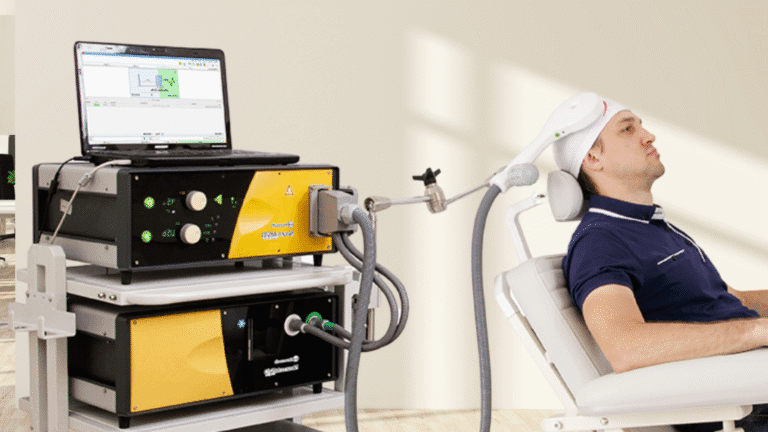
Clinical rTMS
Clinical systems commonly produce fields of roughly 1-2.5 tesla at the coil. Dose is individualized to motor threshold and many cleared depression protocols use approximately 120% of that threshold. NeuroStar, BrainsWay, Neurosoft – CloudTMS and Magstim are among the clinical platforms publicly identified in this region.
iTBS is a protocol, not a separate machine. Deep TMS uses an H-coil with a broader, deeper field; conventional rTMS commonly uses a more focal figure-8 coil.
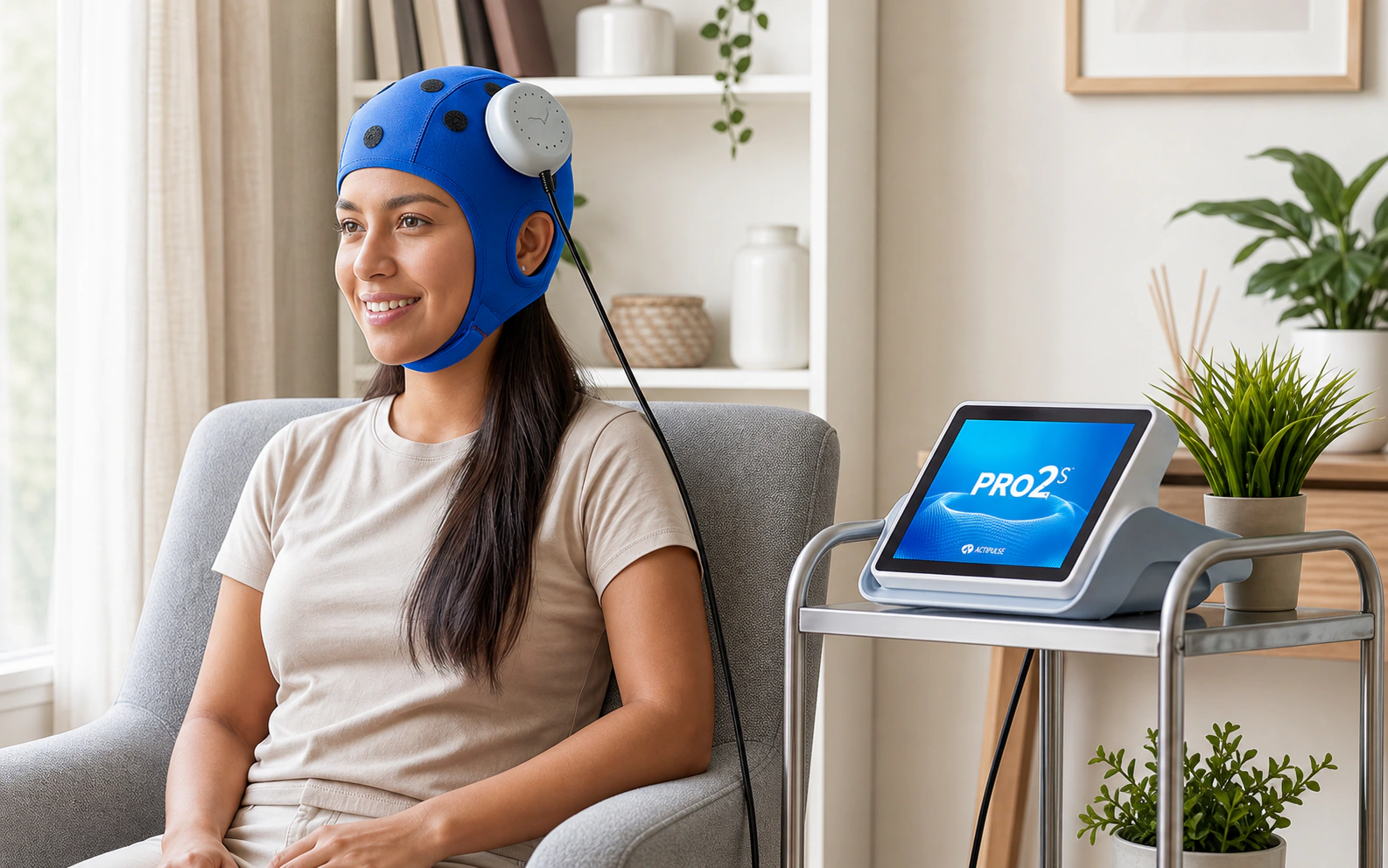
Low-intensity TMS (li-TMS)
Some systems operate in the millitesla range or intentionally below motor threshold. They may have advantages in portability or access, and low intensity is not synonymous with “does nothing.” The narrower point is that these approaches make a different claim and need evidence for the specific device, dose, target and condition.
Ask: “What is the strength of the magnetic pulse that your TMS machine produces? Is it li-TMS? Is the scientific evidence the same?”
What Conditions Does TMS Treat? Evidence and Clearance Are Different Questions
The guide grades research strength separately from regulatory clearance. A U.S. clearance applies to a particular manufacturer, device, protocol, population and use; it is important for safety labeling and payment, but it is not a universal summary of the scientific literature. Off-label treatment can be lawful and clinically reasonable, yet patients deserve a clear explanation of uncertainty and evidence.
Guide tiers: Established = multiple randomized trials, consistent meta-analyses and guideline-level definite efficacy; Strong = meta-analytic support and usually probable-efficacy guidance; Moderate = several positive trials or a smaller base; Preliminary = small or conflicting evidence; Early = pilots, case series or results not yet replicated.
| Condition | Research strength in the guide | U.S. regulatory / coverage context |
|---|---|---|
| Major depression in adults | Established | FDA-cleared protocols; the indication U.S. insurers cover most consistently, usually with prior authorization and treatment-history requirements |
| Depression with prominent anxiety | Strong | Recognized on NeuroStar and BrainsWay adult depression indications; not the same as a primary anxiety disorder |
| Adolescent depression, ages 15-21 | Strong | Adjunctive-use clearances exist for NeuroStar and BrainsWay; coverage varies |
| Obsessive-compulsive disorder | Strong | Adult adjunctive protocols cleared on specific platforms; coverage less consistent than depression |
| PTSD | Strong | Off-label; no FDA-cleared TMS indication for PTSD |
| Smoking cessation | Strong | BrainsWay adult clearance; coverage remains uncommon |
| Other substance-use disorders | Moderate | Off-label and usually self-pay |
| Primary anxiety disorders | Moderate | Off-label and generally not covered as a primary indication |
| Bipolar depression | Moderate | Off-label; careful mood-stabilization and mania/hypomania monitoring are important |
| ADHD | Moderate | Off-label; evidence is promising but conflicting and still developing |
| Neuropathic pain | Established | Guideline-supported but not FDA-cleared as a pain indication in the U.S. |
| Motor recovery after stroke | Established | Not FDA-cleared; strongest combined-treatment rationale is with task-specific rehabilitation |
| Chronic post-stroke aphasia | Strong | Not FDA-cleared; generally paired with speech-language therapy in research |
| Fibromyalgia; Parkinson’s disease; multiple sclerosis | Moderate | Not FDA-cleared for these applications |
| Cognitive decline, MCI and dementia | Moderate | Not FDA-cleared; follow-up is often short and larger trials are needed |
| Autism spectrum conditions | Preliminary | No consensus protocol; off-label |
| Post-COVID cognitive symptoms | Early | Investigational in practice |
FDA categories apply in the United States. Mexico uses its own regulatory system through COFEPRIS. The evidence grading is relevant on both sides of the border, while regulatory and coverage rules differ.
How Much Does TMS Cost in El Paso? Insurance, Self-Pay and Total Course Price
Insurance-based TMS in the United States
Coverage is most consistent for FDA-cleared adult depression treatment and commonly requires prior authorization, documented diagnosis, and a record of previous medication or psychotherapy trials. Ask whether every proposed session is authorized, whether authorization must be renewed, and what you could owe if payment is denied after treatment starts.
Self-pay TMS
Do not compare clinics using only the advertised session fee. Request an itemized estimate covering the evaluation, medical screening, motor-threshold mapping, cost per session, expected acute course, extra sessions, tapering, maintenance, follow-up, cancellation fees, and charges for imaging, neuronavigation or special protocols.
Cross-border self-pay in Ciudad Juarez
NeuroSpa’s published prices at the guide’s verification date were approximately US$60 / MX$1,000 for the initial clinical evaluation and approximately US$100 / MX$1,800 per TMS session, with a qEEG brain map and symptom profile included when treatment begins. There sessions last 1 hour and integrated psychotherapy, neurofeedback, cognitive rehabilitation, and other therapies based on the patient’s needs and profile. Prices and exchange rates change; verify the current written total before starting.
Compare the entire course, not a single visit.
Is It Practical to Cross the Border From El Paso for TMS?
Cross-border care is routine in the region, but TMS is a multiweek commitment. A conventional course may require about 20-36 visits over four to nine weeks. Test the trip at the times you would actually travel and include parking, the drive or walk to the clinic, and the return crossing.
- Documents: U.S. citizens returning by land generally need a WHTI-compliant document such as a passport book, passport card or SENTRI card. Confirm requirements for your citizenship and travel status.
- SENTRI: it can reduce the burden, but every traveler using the lane generally must be enrolled and carry the proper card. Wait times still vary.
- Total cost: include fuel, tolls, parking, meals, lodging if needed, missed work, evaluation, mapping, the full acute course, tapering and maintenance.
- Insurance: assume outpatient care in Mexico is self-pay unless your plan confirms otherwise in writing.
- Records: request the evaluation, protocol, motor threshold, target, intensity, session log, symptom scores, medication changes and test data in a format your U.S. clinician can use.
- Continuity: decide before starting who will monitor medications, symptoms, relapse risk and follow-up at home.
Mexico has a different regulatory framework, not an absence of regulation. Verify professional credentials, facility authorization, device registration, safety procedures and informed consent as carefully as you would in the United States.

TMS + Psychotherapy + Neurorehabilitation
Most regional TMS is delivered as a standalone procedure. Some clinics pair the stimulation course with structured psychological or cognitive treatment. The rationale is that TMS may alter plasticity in targeted circuits, while active rehabilitation or psychological work can give that plasticity something meaningful to consolidate.
The strongest evidence for combined care is in rehabilitation, such as pairing motor-cortex stimulation with physical or occupational practice after stroke. In psychiatry, studies combining rTMS with cognitive-behavioral therapy, cognitive training or symptom provocation are encouraging, but evidence that psychotherapy universally improves depression TMS outcomes remains limited and heterogeneous.
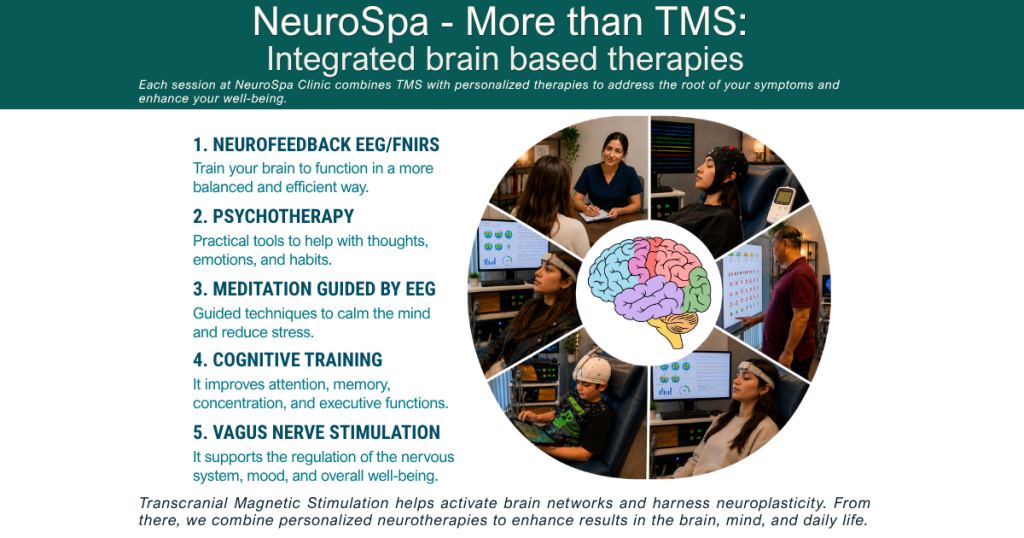
How NeuroSpa describes its integrated model
NeuroSpa delivers clinical rTMS on a Neurosoft Neuro-MS/D system. Motor threshold is determined at the first session; qEEG information may inform planning; and symptoms are followed with structured measures. Depending on the patient – not as a universal package – care may incorporate psychotherapy, cognitive training, mindfulness, EMDR, art therapy, music-based entrainment, taVNS, red-light therapy, neurofeedback, EEG-guided meditation or VR-assisted work.
Not every patient receives every modality. This description is included because combined delivery is the topic, not as a recommendation. Evaluate NeuroSpa with the same questions used for every other clinic.
Questions to Ask Any TMS Provider
- What exact device, model and coil will you use, and what is it cleared or authorized to treat?
- Is my proposed treatment cleared, evidence-supported off-label, or investigational?
- How will you determine motor threshold, treatment target and stimulation intensity? Ask for intensity as a percentage of motor threshold, pulses per session and the plan for rechecking threshold.
- Who is clinically responsible for screening and deciding whether TMS is appropriate?
- Who will operate the machine, what training do they have, and who can change settings?
- How many sessions are planned, how often, and what happens if I respond early or do not respond?
- How will improvement or worsening be measured? Ask for baseline scores, repeated standardized measures and decision points.
- What is the complete cost? Request every evaluation, mapping, session, taper, maintenance, follow-up and cancellation charge.
- What happens after the acute course? Clarify tapering, maintenance, relapse monitoring, medication management and re-treatment.
- Can evaluation, consent, treatment and safety communication be delivered fluently in my preferred language?
- For wellness, performance or another nonstandard claim, what peer-reviewed evidence supports this exact device, dose, target and goal?
A careful clinic does not need to promise certainty. Clear acknowledgment of limits and uncertainty can be a sign of responsible practice.
Frequently Asked Questions About TMS Near El Paso
What does TMS feel like?
Most people describe repeated tapping or knocking on the scalp. It can feel uncomfortable at first, and facial-muscle twitching may occur. Tell the operator if it hurts; coil angle and intensity can often be adjusted within the clinical plan.
Does TMS require anesthesia?
No. Nothing is implanted, patients remain awake, and there is generally no recovery period.
Can I drive after TMS?
Patients typically return to normal activities and drive themselves after a standard session, unless their clinician advises otherwise for their circumstances.
How long is a session?
Protocols vary from roughly three minutes for some iTBS protocols to approximately 19-37 minutes for many conventional rTMS protocols. The full appointment may be longer.
How many treatments are typical?
A common acute course is about 20-36 sessions over four to nine weeks. Some plans use two or three visits per week, spreading the course over more calendar time. Reduced-frequency evidence is less extensive and should be matched to the condition and protocol.
Why does the clinician make my hand move first?
The hand twitch is calibration, not the treatment. It helps determine the individual motor threshold used to set stimulation intensity.
Is TMS FDA approved?
Specific devices and protocols are cleared for defined conditions and populations. “TMS” is not a blanket clearance for every machine, target, dose, age group, or advertised use.
Does insurance cover TMS?
U.S. coverage is strongest for adult major depression and often requires prior authorization plus documentation of earlier treatments. Off-label uses are usually not covered. Verify benefits, session limits, and your potential balance in writing.
Is Spanish-language TMS available near El Paso?
Some regional providers report bilingual care, including TeleMind, AAPsychiatry by direct report, and NeuroSpa in Ciudad Juarez. Ask whether evaluation, consent, symptom scales, treatment and urgent communication can all be handled fluently in your preferred language.
Is TMS cheaper in Ciudad Juarez?
Published Juarez self-pay prices can be lower than typical U.S. self-pay rates, but compare the full course: evaluation, mapping, sessions, tapering, maintenance, travel, parking, missed work and follow-up.
Is TMS in Mexico legal?
Mexico regulates clinics and medical devices under Mexican federal and state systems, including COFEPRIS, rather than the U.S. FDA. Verify facility authorization, responsible clinicians, device registration, safety procedures and consent.
What is Deep TMS?
Deep TMS uses an H-coil that stimulates a broader and deeper field than a figure-8 coil. Neither coil is simply better; the device, coil and validated protocol need to fit the indication.
What is theta-burst or iTBS?
Intermittent theta-burst stimulation is a pulse pattern, not a separate machine. On clinical TMS hardware, it can compress some sessions to roughly three minutes.
Is qEEG required for TMS?
No. Clinics may use scalp measurements, EEG landmarks, neuronavigation, imaging or qEEG-informed planning. Ask what each method changes about your treatment and what evidence supports its use.
Can children receive TMS?
Age, diagnosis, device labeling, consent and clinical expertise all matter. U.S. adolescent depression clearances cover defined ages and adjunctive use; many other pediatric applications remain off-label or investigational.
Considering TMS in El Paso or Ciudad Juarez?
NeuroSpa Clinic provides bilingual clinical TMS in Ciudad Juarez, near the El Paso border. The clinic uses a Neurosoft Neuro-MS/D system, determines motor threshold, can incorporate qEEG-informed planning and structured symptom tracking, and offers complementary psychological or cognitive work when clinically appropriate.
Initial clinical evaluation: approximately MX$1,000 / US$60
TMS session: approximately MX$1,800 / US$100
qEEG brain mapping and symptom profile included when treatment begins
Prices were published and verified in September 2026; confirm current pricing and exchange rate. An evaluation is required, and not every person is an appropriate candidate.